
A Journey Through Time: 17th Century Portuguese Azulejos
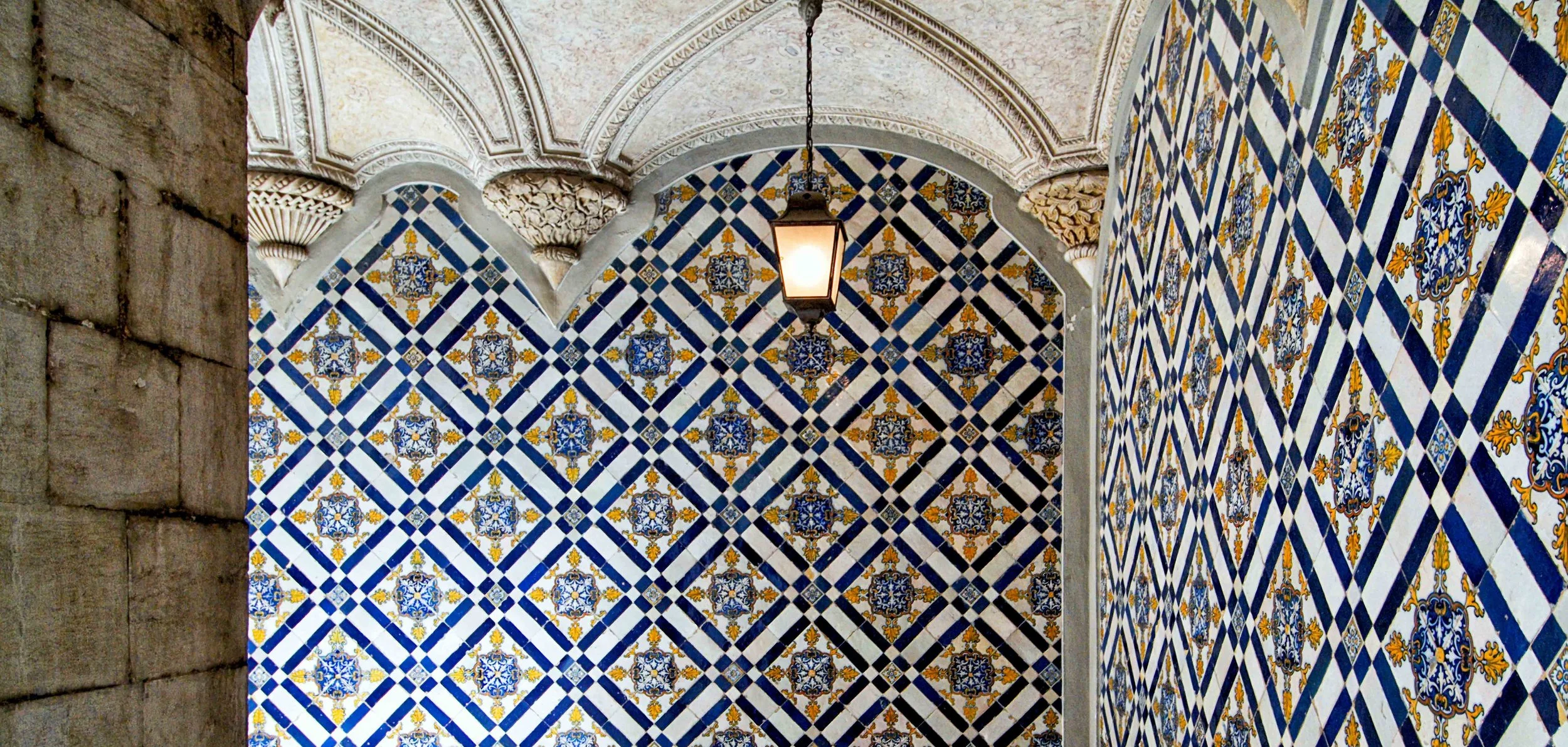
National Tile Museum, Lisbon (picture credit: tickets-lisbon)
If the 1500s were about discovery, the 1600s were about status, storytelling, and exuberant decoration. For the culturally curious traveler, understanding this era is key to recognizing the masterpieces you'll see at the National Tile Museum or the grand palaces of Sintra and Azeitão, just to name a couple of them.
A Symbol of Restoration and Power
In 1640, Portugal regained its independence from Spain. This sparked a wave of national pride. The nobility, seeing their power reinforced, began building sumptuous quintas (manor houses) and aristocratic palaces.
To decorate these massive walls, they turned to azulejos. These weren't just decorations; they were "status symbols." Large panels were commissioned to show off:
Portraits of ancestors to prove noble lineage.
Hunting scenes and gallant gatherings.
Epic battles and scenes from Greek and Roman mythology.
Satirical and comic episodes that showcased the wit of the era.
The Three Faces of 17th-Century Tiles
We can notice three distinct ways tiles were presented during this period:
Padrão (Pattern): Geometric shapes (squares, diamonds) that repeat infinitely, often mimicking expensive fabrics or rugs. The dominating colors here were cobalt blue and yellow. For example, the Church of São Roque in Lisbon features stunning "diamond point" patterns using these colors.
Figurativo (Figurative): Storytelling panels. Early in the century, these were polychrome (multi-colored), but they eventually evolved into the iconic blue and white style. For example, the Monastery of São Vicente de Fora houses famous panels of La Fontaine's fables.
Ornamental: Focuses on nature: exotic birds from India, Chinese porcelains, and flowers.Look for "flora and fauna" panels.
The "Everlasting Tapestry"
Why did the Portuguese elite prefer tiles over the tapestries used in the rest of Europe? The answer is a blend of climate and practicality. In the humid Portuguese air, fabrics would rot or fade. Instead, azulejos provided a washable, bright, and durable alternative. They acted as "trompe l'oeil" (optical illusions), creating the effect of luxury rugs or architectural elements like pyramids and columns.
Also, the 17th century was a time of "horror vacui"—a fear of empty spaces—leading to the floor-to-ceiling masterpieces we admire today.
*
Sources: Azulejos - Uma História Aos Quadradinhos - António Araújo, Filipe Abranches (Coleção:Museu Casa da Moeda)
