
A Journey Through Time: 16th Century Portuguese Azulejos
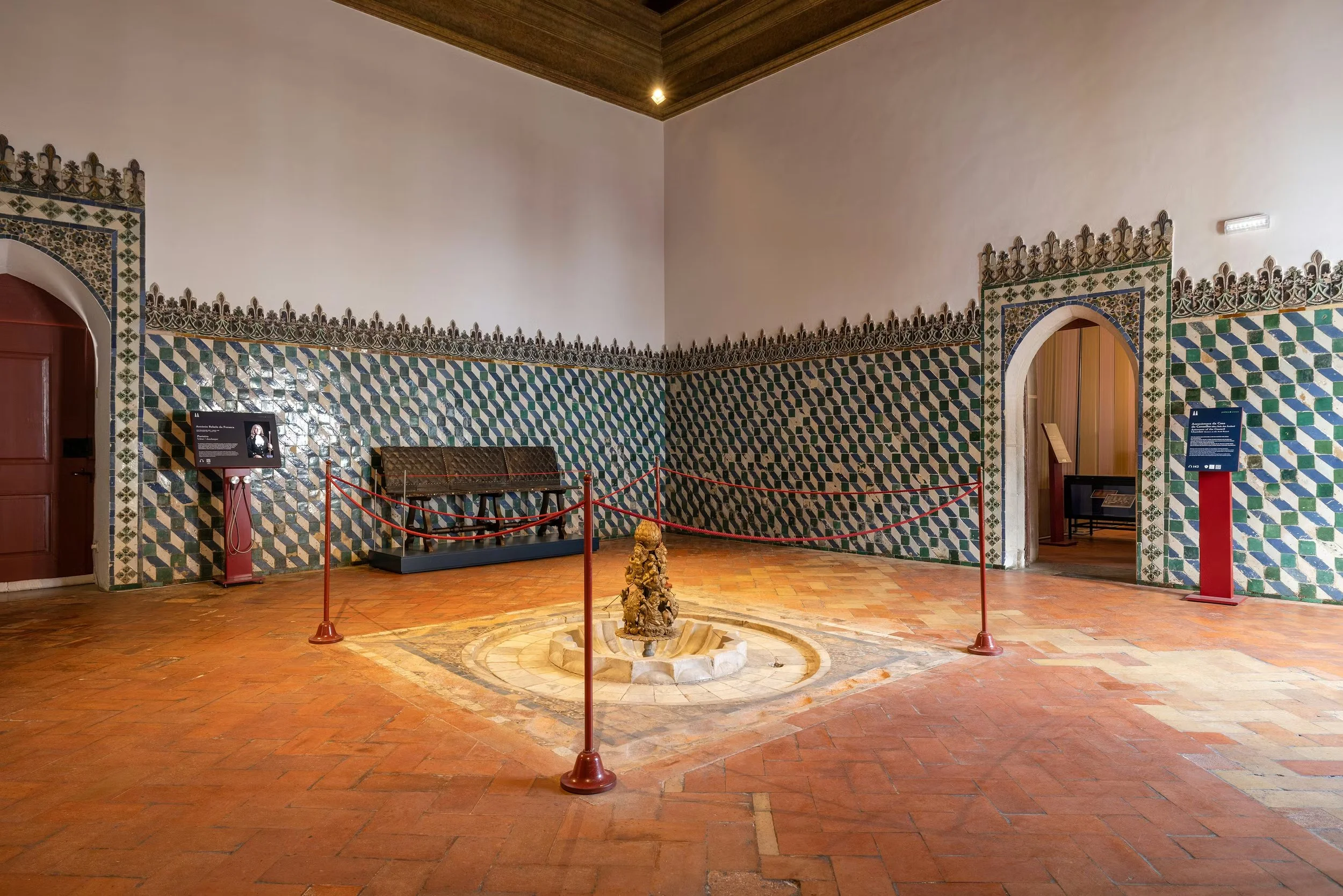
National Palace of Sintra (picture credit: wmf.org)
If you walk through the streets of Lisbon or Porto (or many other cities!) today, you are surrounded by a sea of ceramic art. From metro stations to church facades, the Portuguese Azulejo is the icon of the country. But to truly understand this craft, we must travel back to the 16th Century—the Golden Age of Discovery.
The King’s Vision: How it All Began
The story of the Portuguese tile as we know it changed forever in 1498. King D. Manuel I traveled to Spain (Toledo and Zaragoza), where he was mesmerized by the "Hispano-Moresque" style. These were tiles that combined Christian Spanish aesthetics with the intricate, geometric art of the Islamic Moors.
Fascinated, the King commissioned these "special tiles" from workshops in Seville to decorate the National Palace of Sintra. Even today, visitors can marvel at these early patterns that shimmer like fish scales under the Atlantic light.
Why Did Portugal Cover Its Walls in Ceramic?
Historians still debate why Portugal, more than any other European nation, fell in love with wall-to-wall tiling. However, the 16th-century texts suggest a few practical and poetic reasons:
One was a durable alternative to fabric: In the Middle Ages, the wealthy used expensive rugs and tapestries to decorate cold stone walls. But textiles rot, tear, and trap dust. Azulejos were the "everlasting tapestry"—washable, bright, and indestructible.
Also was important the play of light: Unlike dark paintings, tiles reflect light. In the 1500s, tiling a room meant turning a dim, heavy space into a bright, "illuminated" sanctuary.
And the intention of imitating architecture: Tiles were used to mimic grand arches and columns, giving humble rooms a sense of regal depth.
From Importing to Producing: The Influence of the "Majolica" Technique
During the Age of Discoveries, Portuguese and Dutch sailors brought back fine porcelains from China. This sparked a desire for more sophisticated techniques. Portugal began importing tiles from Flanders (Belgium) and adopted the Majolica (or Faenza) technique from Italy and Spain.
This new method allowed artists to paint directly onto the wet tin-glaze. It was faster, more precise, and allowed for the beautiful blue and white narratives that would eventually define the Lisbon skyline. Soon, the first local factories were established in Lisbon, turning an imported luxury into a national and popular identity.
*
Sources: Azulejos - Uma História Aos Quadradinhos - António Araújo, Filipe Abranches (Coleção:Museu Casa da Moeda)
